Most sellers in Jacksonville brace for one moment: the buyer's home inspection. They declutter, patch the drywall, service the AC, and wait for the report that lists everything from a sticky window to a hairline crack in the driveway. Once that contingency clears, most sellers exhale. The deal feels done.
It isn't. Not yet.
The inspection that actually decides whether an older Jacksonville home closes usually hasn't happened yet at that point. It's the four-point inspection an insurance carrier orders once the buyer applies for coverage, and it can undo a deal that has already survived everything else, sometimes with just days left before closing.
The sequence nobody explains upfront
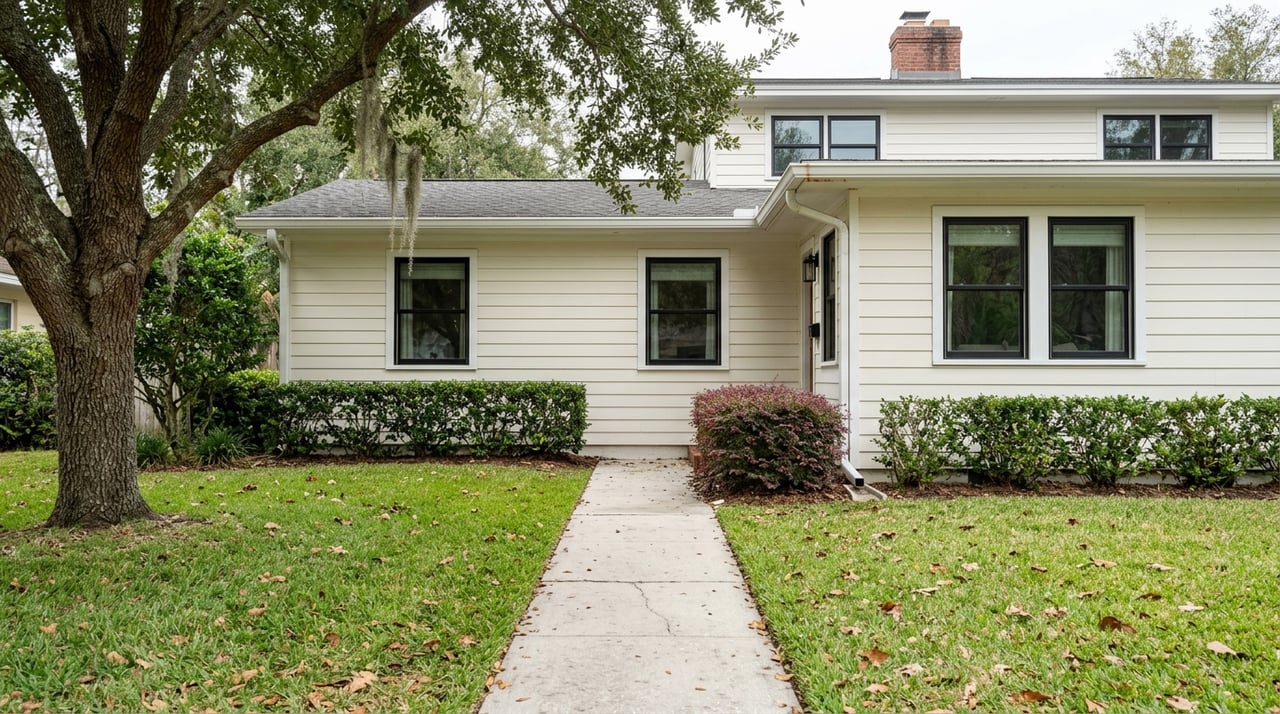
Here's how it typically plays out on a home built before the early 2000s, which describes a large share of Jacksonville's housing stock in Riverside, Avondale, San Marco, and older pockets of Mandarin. The seller accepts an offer. The buyer's inspection turns up nothing that kills the deal. Everyone moves toward closing. Then the buyer's agent requests an insurance quote so coverage can be bound in time to fund the loan.
That's when the carrier orders a four-point inspection, a narrow report that looks only at the roof, electrical panel, plumbing, and HVAC system. If the roof is too old, if the panel is a brand insurers have blacklisted, or if the plumbing is a material they won't touch, the carrier can decline to write the policy outright. No bound policy means no funded mortgage, because coverage is a closing condition for nearly every lender. The buyer is suddenly without insurance days before they're supposed to have keys, and the seller is watching a closed deal come apart over a system nobody discussed at the negotiating table.
This isn't a rare edge case. It's the standard underwriting gate for any Jacksonville home in the age range where four-point inspections apply, which most carriers set somewhere between 20 and 30 years, with some starting as early as 20 and nearly every carrier requiring one by 40.
The four things insurers actually flag
A four-point inspection ignores cosmetic issues entirely. It's a condition report built around four systems, and each one has a short list of specific red flags that carriers treat as near-automatic declines rather than negotiable soft spots.
| System | What triggers a decline | Why it matters at closing |
|---|---|---|
| Roof | Asphalt shingle roofs past 15 to 20 years, or less than an estimated five years of remaining life | Many carriers won't bind a policy regardless of the rest of the home's condition |
| Electrical | Federal Pacific or Zinsco panels, unremediated aluminum wiring | Treated as fire hazards, frequently an automatic decline |
| Plumbing | Polybutylene pipe (gray plastic, installed 1978 to 1995), corroded cast iron | Considered a near-certain future leak claim |
| HVAC | Systems well past 15 years old | Rarely a standalone decline, but it adds up with other flags |
A soft flag, like a roof with a few years of life left, usually just raises the buyer's premium. A hard flag, like polybutylene pipe or a Federal Pacific panel, tends to close the door on standard coverage entirely and push the buyer toward surplus lines or Florida's insurer of last resort, both of which come at a real cost.
What this actually costs, in dollars, in the same ZIP code
The gap between an insurable home and a flagged one isn't small. In one 32259 comparison drawn from active policies in March 2026, a home built in 2019 with a hip roof and current building code construction insured for under $2,100 a year. A home built in 1994 nearby, with a shingle roof installed in 2012, insured for over $3,900 for the same coverage. Same ZIP code, similar dwelling value, an $1,800 annual gap driven almost entirely by age and system condition. Over a decade, that's roughly $18,000 a buyer factors into what they're willing to pay, whether or not anyone says so out loud during negotiations.
That's the real reason geography inside Jacksonville matters here more than the citywide median ever will. Riverside and Avondale carry beautiful, character-rich housing stock, but that stock also carries the insurance exposure that comes with older wiring, older plumbing, and roofs that have already been replaced once or twice. San Marco adds river-adjacent flood exposure on top of the same age-related system risk. Meanwhile, newer construction in Nocatee, Shearwater, and Durbin Crossing tends to qualify for the most favorable rates available in the market, because it was built to more current wind-resistance codes with newer systems across the board. None of this makes one part of Jacksonville a better or worse place to live. It does mean the insurance conversation starts from a different place depending on which neighborhood, and which decade of construction, a listing sits in.
The 2026 twist that makes this easy to underestimate
Florida's insurance market has genuinely loosened this year. Citizens Property Insurance, the state's insurer of last resort, had dropped below 400,000 policies statewide as of April 2026, as private carriers expanded back into the market. Several carriers have filed rate reductions in the range of 5 to 10 percent following tort reform that curbed frivolous roof litigation and assignment-of-benefits abuse. Some insurers are even writing older roofs again, using actual cash value endorsements that cover the roof at depreciated value rather than full replacement cost, which is a real option for a roof that would have been turned away outright under the tighter underwriting of recent years.
It's tempting to read that as "the insurance problem is over." It isn't, at least not for the hard flags. A softer market means more carriers competing for homes with soft flags, like a 16-year-old roof with a few years left. It does very little for a home with polybutylene pipe or a Federal Pacific panel, because those aren't age problems a market cycle fixes. They're specific components insurers have decided not to underwrite, full stop, regardless of how many carriers are writing business in Florida this year. Florida law does offer sellers one piece of leverage worth knowing: insurers generally can't refuse to renew a policy solely because of roof age if a qualified inspector certifies the roof still has meaningful useful life left. That helps with roofs. It does nothing for pipe or panel.
Florida also updated its wind mitigation inspection form in April 2026 for the first time in over a decade. If a seller has an older wind mitigation report on file, it's worth checking whether it predates the update, since some carriers won't accept the old version.
What a seller can actually do about it
The advantage in this situation belongs entirely to whoever moves first. Once a buyer's four-point report surfaces a hard flag mid-contract, the seller is negotiating from a position where everyone in the room knows the next buyer will hit the identical wall. Getting ahead of that changes the conversation completely.
A few moves matter more than the rest:
- Order a four-point inspection before listing, not after going under contract. It costs roughly $75 to $200 and tells you exactly what a buyer's carrier is going to find.
- If the roof is close to the line, replace it with real runway before listing, and keep the permit, the final city inspection sign-off, the manufacturer warranty registration, and a fresh wind mitigation report. A roof nobody can document is worth far less than one with a clean closeout package.
- If a prior owner repiped the home, find the paperwork. "Plumbing updated" in a listing description is only useful if you can show what was replaced, when, and whether it covered the whole system rather than just the visible sections.
- If the electrical panel is a Federal Pacific or Zinsco brand, price the replacement now. It's a defined cost, typically a few thousand dollars, against an open-ended risk of losing a buyer's financing altogether.
None of this is about hiding a flaw. It's about controlling when the conversation happens and who's holding the leverage when it does.
A few questions worth asking before you list
Does every Jacksonville seller need a four-point inspection before listing? Not every seller, but it's worth ordering one on any home roughly 20 years or older, since that's the range where most carriers start requiring it from a buyer anyway. Finding out early costs less than finding out during a contract deadline.
If I already replaced the roof, does that solve the insurance issue automatically? It solves the roof line item. It says nothing about the panel or the plumbing, which are evaluated independently. A new roof on a home with an old Federal Pacific panel can still get flagged.
Does the softer 2026 insurance market mean I can skip this? The softer market helps roofs with a few years of life left find more carrier options and better pricing. It doesn't change how carriers treat polybutylene pipe or blacklisted panel brands. Those remain hard flags regardless of how many insurers are competing for business this year.
If you're weighing whether to prep an older Jacksonville home for the market, or you want a clear read on how its systems will hold up once a buyer's insurance carrier starts asking questions, Campanaro Group has spent years pricing and positioning homes across Jacksonville's older neighborhoods and its newest ones. Reach out before you list, not after a contract is already on the table.