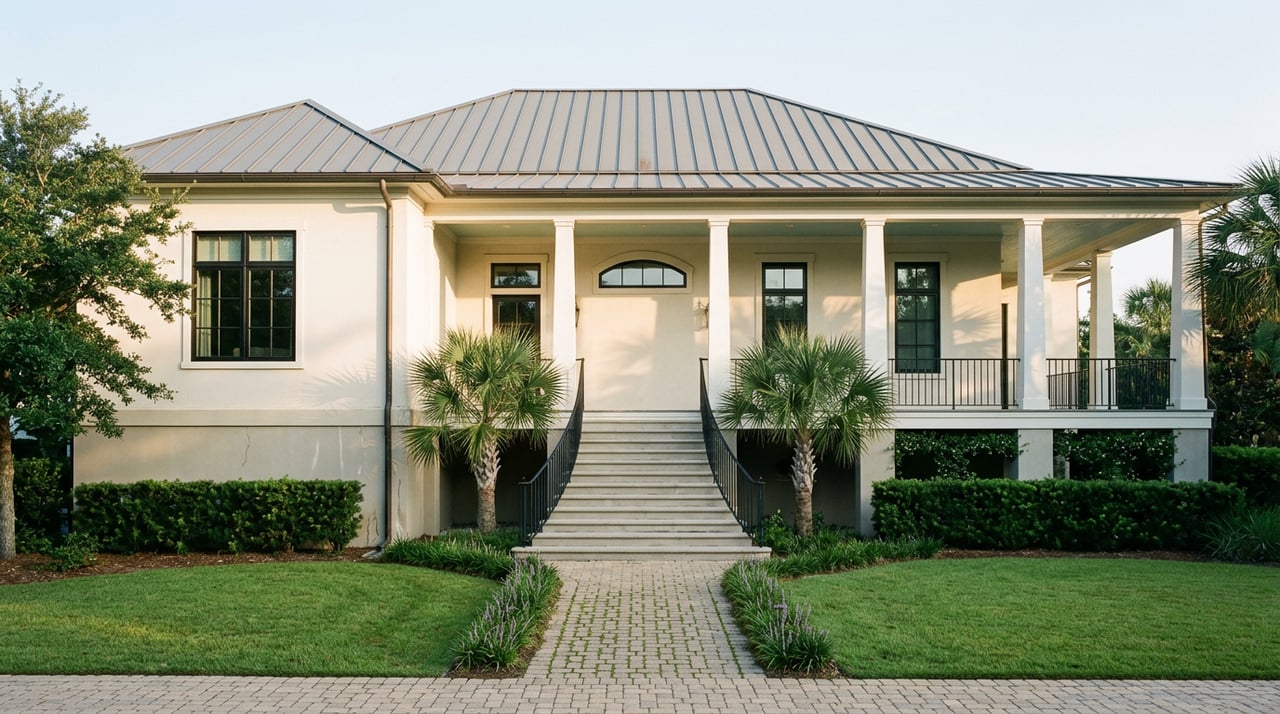
A buyer's agent called about a 1920s cottage in Davis Shores in June and didn't ask about the kitchen. She asked for the elevation certificate. Not the survey, not the inspection report, the elevation certificate specifically, because her clients had already run the flood insurance numbers before they'd seen a single photo of the house.
That's the shift worth understanding if you own a historic or flood-zone property in St. Augustine and you're thinking about listing it. The city's flood insurance discount got better this year. At the same moment, the paperwork that proves you deserve that discount became the first thing a serious buyer asks for, not the last. Cheaper insurance didn't lower the bar on documentation. It raised it.
What Actually Changed This Spring
The City of St. Augustine improved its Community Rating System score with FEMA, moving from Class 5 to Class 4 in the National Flood Insurance Program. That change took effect April 1, 2026, and it means most NFIP policies issued or renewed inside the city on or after that date carry a 30 percent premium discount, up from 25 percent under the old rating. The city announced the jump during an August 25, 2025 commission meeting, and Richard "Buddy" Schauland, the city's Floodplain Administrator and Building Official, told commissioners the community's score improved by almost 200 points, enough to clear the threshold FEMA requires for Class 4.
That puts St. Augustine among roughly 25 communities nationwide rated Class 4 or better, out of about 1,800 communities that participate in the voluntary CRS program at all. A decade ago the city was rated Class 7. City Manager David Birchim credited the jump to years of unglamorous work: drainage maintenance, updated stormwater standards, and floodplain studies under the city's Watershed Master Plan that FEMA formally accepted.
| CRS Rating | Effective Period | NFIP Premium Discount |
|---|---|---|
| Class 7 | roughly a decade ago | lower baseline discount |
| Class 5 | until March 31, 2026 | 25% |
| Class 4 | April 1, 2026 onward | 30% |
For owners of older homes in Zone AE or VE, the practical range local flood insurance brokers now quote for typical St. Johns County profiles in 2026 runs from roughly $480 on the low end to $4,800 a year on the high end, with coastal high-hazard Zone VE parcels concentrated at the top of that range. The five-point jump in discount doesn't change which zone a home sits in. It changes how much that zone costs to insure, which is exactly why buyers have started asking for elevation data before they ask about paint colors.
The Law That Makes the Discount Matter More
Two years ago, a buyer's only real flood-history tool in Florida was asking politely and hoping for an honest answer. Florida courts were split on whether a tendency to flood even counted as something a seller had to disclose. That changed with House Bill 1049, effective October 1, 2024 and now codified as Florida Statute 689.302. Sellers of residential property statewide must complete a written flood disclosure before a contract is signed, stating whether they've ever filed an insurance claim for flood damage or received federal flood assistance on the property.
The law doesn't require disclosing a neighbor's flood history or general area risk, only the seller's own claims and FEMA assistance record. But paired with a lower, more attractive insurance number now on the table, it means buyers have both a legal right to the property's flood history and a strong financial reason to ask for it in detail. A discount that looks good on paper invites scrutiny of whether the paper is accurate.
The Document That Now Decides Financing
Ask any local flood insurance agent what changes a quote the most for an older St. Augustine home and the answer is consistent: a documented first-floor elevation. An elevation certificate showing a structure's finished floor height relative to the required base flood elevation can move a policy from the expensive end of the range to something far more manageable. Without one, an underwriter has to assume the worst case for the zone, which for a home in the Historic District, Lincolnville, or Davis Shores usually means the highest tier of pricing available.
The city can often produce an elevation certificate on file for anything built after 1991 in a Special Flood Hazard Area. For older homes, the ones that make up most of the historic housing stock here, no certificate exists unless a prior owner commissioned one. That gap is exactly what buyer's agents have started flagging early, before an offer, not during underwriting.
A HARB Exception Most Sellers Never Hear About
St. Augustine's Historic Architectural Review Board oversees exterior changes to property in the city's five Historic Preservation zoning districts, and for most projects that means a Certificate of Appropriateness before a building permit is issued. HARB meets the third Thursday of each month in the Alcazar Room at City Hall, and the review can add real time to a renovation timeline if a seller is trying to freshen up a facade before listing.
There's a narrower carve-out that surprises even experienced local owners. Under Florida Statute 553.79(26), a privately owned single-family home in a flood zone can be exempt from HARB review if the owner provides a recent sealed survey or elevation certificate showing the home's existing finished floor sits below the zone's required base flood elevation. In plain terms, some of the same older, lower-sitting homes that carry the highest flood insurance exposure are also the ones that may not need full board review for certain work, provided the elevation documentation exists to prove it.
That's not a reason to skip HARB entirely. It's a reason the elevation certificate keeps showing up as the document that unlocks options rather than paint chips or historic guideline binders.
What This Means If You're Listing This Fall
- Order the elevation certificate before you sign a listing agreement, not after an offer arrives. Underwriting delays caused by a missing certificate are one of the more common reasons a St. Augustine closing slips past its original date.
- Complete the flood disclosure form early and treat it as a document that builds trust rather than a liability to minimize. Buyers in this market increasingly read it before they read the listing description.
- If your home was built more than 50 years ago and sits in a flood zone, ask the city's Historic Preservation staff directly whether the elevation-based HARB exemption applies to your planned work before you commission exterior renovations meant to help the sale.
- Get both an NFIP quote and a private flood insurance quote. The 30 percent CRS discount applies to NFIP policies, not automatically to private carriers, and buyers comparing monthly costs will want to see both.
A Few Questions Worth Asking Before You List
Does the 30 percent discount apply automatically to my policy? Yes, for most NFIP policies inside St. Augustine city limits issued or renewed on or after April 1, 2026. It's tied to the address being within city limits, not to any action the homeowner has to take.
I already have an old elevation certificate. Is that enough? Only if the finished floor elevation and structure haven't changed since it was completed. If the certificate predates additions, regrading, or a foundation repair, most insurance agents and lenders will want a current one before quoting.
Does the flood disclosure law require me to mention that other homes on my street have flooded? No. Florida Statute 689.302 requires disclosure of the seller's own insurance claims and any federal flood assistance received for that specific property, not general neighborhood history.
Selling a historic St. Augustine home was never just about the house. It's about the paper trail that proves what the house actually is: what elevation it sits at, what its insurance really costs, what it's allowed to become. That trail got more valuable this year, not less, and the sellers who have it ready are the ones closing on schedule.
If you're weighing whether to list a historic or flood-zone property in St. Augustine this season, Campanaro Group can walk through what documentation your specific home needs and how it affects both pricing and marketing before you go on the market. Contact us to start that conversation.